
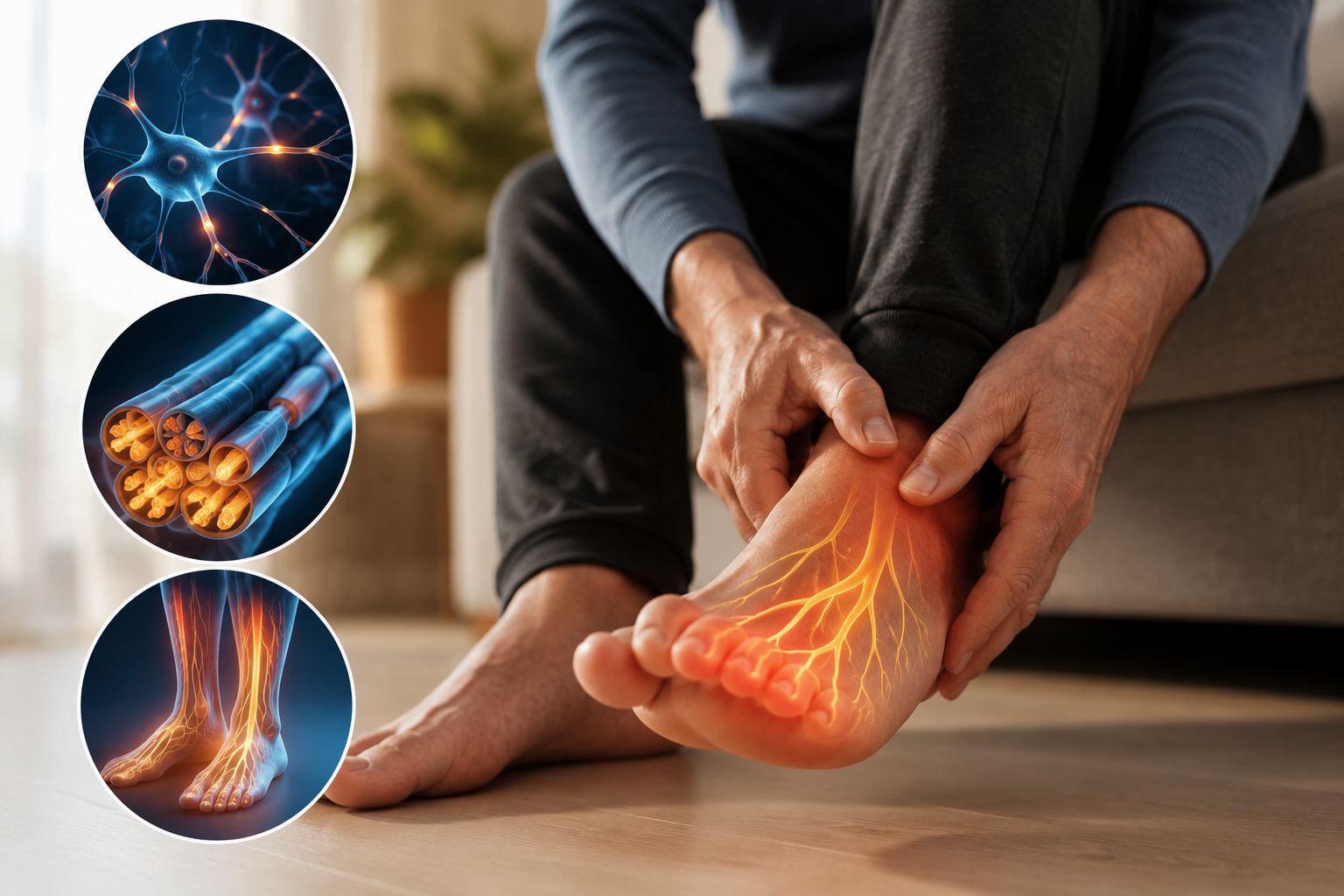
If you’ve ever experienced numbness, tingling, burning, or sharp nerve pain in your hands or feet, you know how frustrating peripheral neuropathy can be.
For many people, symptoms begin gradually—perhaps your feet feel like they’re asleep more often, your balance isn’t what it used to be, or you notice burning pain that seems worse at night.
Over time, those symptoms can become more frequent and more severe, affecting your ability to walk, exercise, sleep, and enjoy everyday life.
Many people are told that neuropathy is simply something they’ll have to live with.
At Herb + Ōhm, we don’t accept that.
While every case is unique, we believe the body has an incredible ability to heal when the underlying causes contributing to nerve dysfunction are identified and addressed.
What Is Peripheral Neuropathy?
Peripheral neuropathy occurs when the peripheral nerves—the nerves outside of the brain and spinal cord—become damaged or dysfunctional.
These nerves are responsible for carrying messages between your brain and the rest of your body.
When they are injured or not functioning properly, communication begins to break down.
This can result in:
- Numbness in the feet or hands
- Tingling or “pins and needles”
- Burning pain
- Sharp or electric-like sensations
- Muscle weakness
- Difficulty with balance
- Increased sensitivity to touch
- Reduced coordination
Although symptoms often begin in the feet, they may gradually progress into the legs or affect the hands as well.
The Root Causes of Peripheral Neuropathy (Not Just the Symptoms)
Neuropathy is often described as “nerve damage.”
While technically true, that explanation does little to explain why the nerves became damaged in the first place.
At Herb + Ōhm, we look beyond the diagnosis to better understand the underlying factors contributing to nerve dysfunction.
Common contributors include:
Chronic Inflammation
Persistent inflammation can irritate nerves, impair healing, and contribute to ongoing pain and dysfunction.
Reduced Circulation
Healthy nerves require a constant supply of oxygen and nutrients.
When circulation becomes compromised, nerves may struggle to repair themselves and function optimally.
Metabolic Dysfunction
Conditions such as diabetes are among the leading causes of peripheral neuropathy because elevated blood sugar can damage nerves over time.
Even in non-diabetic patients, metabolic imbalances may contribute to poor nerve health.
Nervous System Dysregulation
As neuropathy progresses, the nervous system itself can become hypersensitive, amplifying pain signals even when tissue damage is relatively mild.
Nutritional Deficiencies
Certain vitamin deficiencies, particularly those involving B vitamins, may contribute to nerve dysfunction and delayed healing.
Peripheral neuropathy is rarely caused by a single factor.
Instead, it often develops when multiple systems within the body become overwhelmed and lose their ability to heal effectively.
Signs and Symptoms
Every patient experiences neuropathy differently, but common symptoms include:
- Numbness in the feet or hands
- Burning sensations
- Tingling or pins and needles
- Sharp, shooting nerve pain
- Muscle weakness
- Poor balance
- Difficulty walking
- Feet that feel unusually cold or unusually hot
- Difficulty sensing the ground beneath your feet
These symptoms often begin gradually but may worsen over time if the underlying causes are not addressed.
Natural Support Strategies (And Their Limitations)
Many people living with neuropathy explore natural approaches including:
- Anti-inflammatory nutrition
- Vitamin supplementation
- Exercise
- Massage
- Physical therapy
- Compression garments
These strategies can absolutely support overall health and are often valuable components of care.
However, by themselves they often fail to fully address the complex factors contributing to chronic nerve dysfunction.
Without improving circulation, calming inflammation, supporting nerve repair, and helping regulate the nervous system, progress may be slow or temporary.
Why Most Neuropathy Treatments Fall Short
Conventional treatment frequently focuses on managing nerve pain through medication.
While medications may help reduce symptoms, they often do not address the underlying environment contributing to ongoing nerve dysfunction.
They typically do not:
- Improve circulation to damaged nerves
- Reduce chronic inflammation
- Support nerve regeneration
- Improve overall nervous system function
- Create a long-term strategy for recovery
As a result, many patients continue experiencing progression despite temporary symptom relief.
How Herb + Ōhm Is Different
At Herb + Ōhm, we don’t simply focus on reducing nerve pain.
We focus on creating an environment where the body has the greatest opportunity to heal.
Our care is designed to:
- Reduce inflammation
- Improve circulation
- Support healthy nerve function
- Calm an overactive nervous system
- Improve mobility and balance
- Enhance overall quality of life
We integrate:
- Acupuncture to support circulation, reduce pain, and regulate nervous system function
- Customized herbal therapy when appropriate
- Advanced healing technologies designed to support tissue healing and reduce inflammation
- Personalized treatment plans based on your health history, symptoms, and goals
Because every patient’s neuropathy has a different story, every treatment plan should be different.
Most importantly, we guide patients through a structured plan of care—not simply treatment when symptoms become unbearable.
Our 3-Phase Approach to Peripheral Neuropathy
1. Relief
The first phase focuses on improving daily quality of life.
Our goals include:
- Reducing burning and tingling
- Improving comfort
- Supporting better sleep
- Enhancing circulation
- Improving daily function
Many patients begin noticing meaningful improvements during this phase.
2. Stabilization
This is where long-term healing begins.
We continue treatment consistently to:
- Support healthier nerve function
- Improve circulation
- Reduce chronic inflammation
- Help the nervous system become less reactive
- Encourage the body to maintain its progress
This phase is critical for creating lasting change rather than temporary relief.
3. Maintenance
Neuropathy often develops over many years.
Maintenance care helps protect the progress you’ve achieved while continuing to support nerve health and overall wellness.
This phase focuses on:
- Maintaining circulation
- Reducing flare-ups
- Preserving mobility
- Supporting long-term function
- Helping you continue doing the activities you enjoy
Maintenance is not dependency—it is protecting the progress you’ve worked hard to achieve.
You Don’t Have to Accept Neuropathy as Your Future
One of the most difficult parts of peripheral neuropathy is being told that nothing more can be done.
We believe there is another way.
By taking a comprehensive approach that addresses inflammation, circulation, nervous system regulation, and the body’s natural healing capacity, many patients are able to experience meaningful improvements in both symptoms and function.
While every patient’s journey is different, our goal remains the same:
To help you move beyond symptom management and toward better health.
Looking for Natural Peripheral Neuropathy Treatment in Chicago?
At Herb +Ōhm, we help patients throughout Chicago and the North Shore uncover the factors contributing to peripheral neuropathy and create personalized treatment plans designed to support long-term healing.
During your consultation, we will:
- Review your complete health history
- Identify potential contributors to your neuropathy
- Develop a personalized treatment strategy
- Walk you through exactly what to expect throughout your care
If you’re ready to explore a comprehensive, root-cause approach to peripheral neuropathy, schedule your consultation today and take the first step toward restoring comfort, confidence, and quality of life.