Whether you’re training for your first 5K, preparing for a marathon, or simply enjoy running to stay healthy, running injuries can quickly derail your progress.
Many runners are told they simply need to rest, ice the injury, stretch more, or replace their shoes.
While these recommendations may temporarily reduce discomfort, they often fail to answer the most important question:
Why did the injury develop in the first place?
At Herb + Ōhm, we believe running injuries are rarely caused by one isolated problem. More often, they are the result of underlying imbalances throughout the body that have gradually built up over time.
Our goal isn’t simply to help you return to running.
Our goal is to help you return stronger while reducing the likelihood that the injury keeps coming back.
Understanding Running Injuries
Running is one of the healthiest forms of exercise, but it also places repetitive stress on the muscles, tendons, ligaments, joints, and nervous system.
When the body can no longer recover from those repetitive stresses, injuries begin to develop.
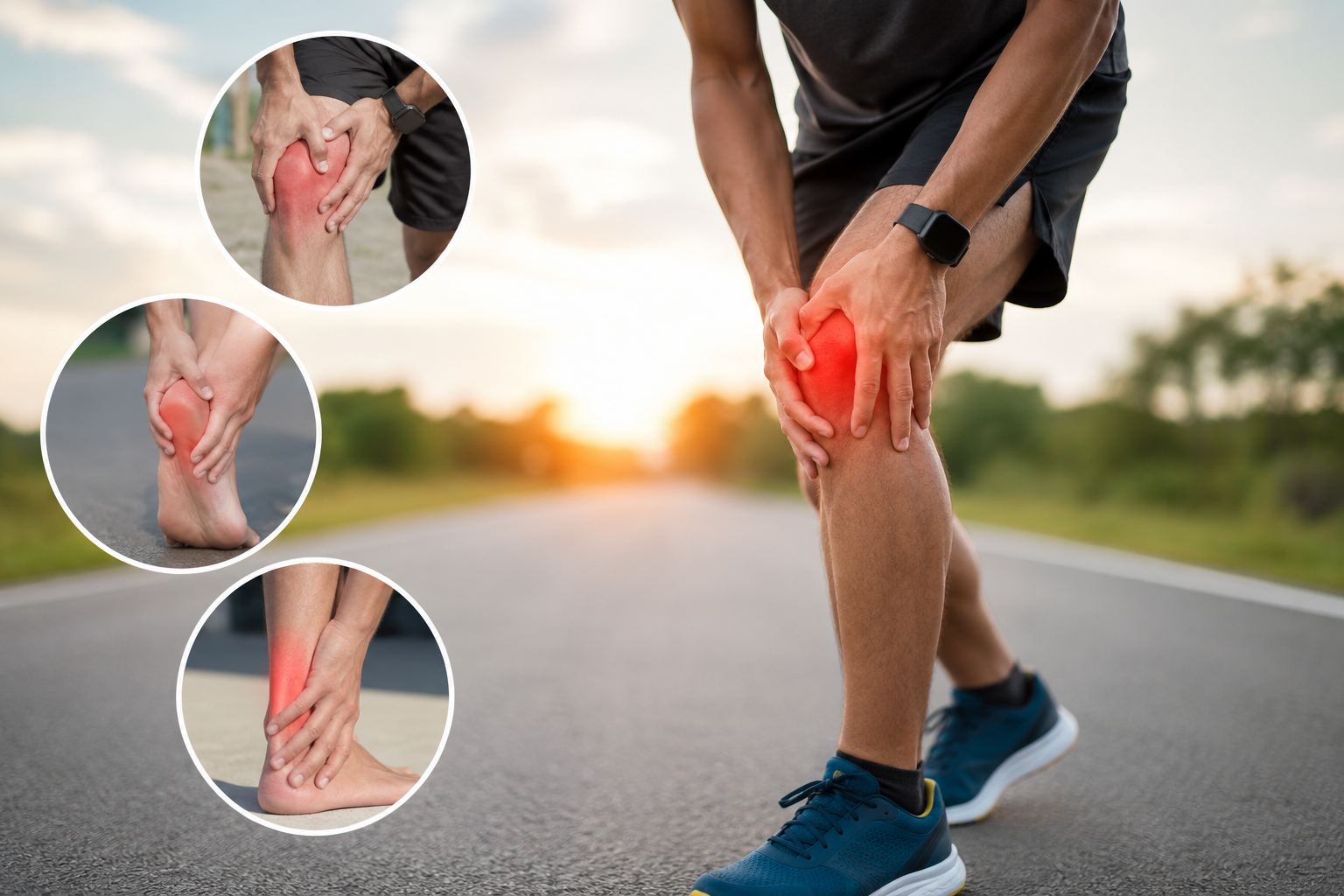
Some of the most common running injuries we see include:
- Runner’s Knee (Patellofemoral Pain Syndrome)
- Achilles Tendinitis
- Plantar Fasciitis
- IT Band Syndrome
- Shin Splints
- Hip Pain
- Hamstring Strains
- Calf Strains
Although each diagnosis may sound different, many share similar underlying causes.
The Root Causes of Running Injuries (Not Just the Symptoms)
Most running injuries are not simply the result of “running too much.”
Instead, they often develop because the body has lost its ability to efficiently tolerate and recover from repetitive movement.
Common contributors include:
Chronic Inflammation
Inflammation is a normal part of healing.
However, when inflammation becomes persistent, tissues remain irritated, recovery slows, and small problems become chronic injuries.
Muscle Imbalances
Weakness or tightness in one area of the body often forces another area to compensate.
For example, weak hip muscles can contribute to Runner’s Knee, while restricted calf muscles may increase stress on the Achilles tendon and plantar fascia.
Treating only the painful area often overlooks the true source of the problem.
Poor Movement Mechanics
Every runner develops movement patterns.
Some are efficient.
Others place unnecessary stress on the knees, hips, ankles, or feet.
Over thousands of steps, those small mechanical issues can become significant injuries.
Nervous System Fatigue
Recovery isn’t just about muscles.
The nervous system also requires time to recover from training.
When recovery is inadequate, coordination decreases, muscle activation changes, and injury risk increases.
Reduced Circulation
Healthy tissues require oxygen and nutrients to repair themselves.
Restricted circulation can slow healing and make injuries more difficult to overcome.
Running injuries are rarely just about one tendon, one muscle, or one joint.
They often reflect a body that is struggling to recover, adapt, and maintain balance.
Signs That Your Body Needs More Than Rest
Many runners push through discomfort because they don’t want to interrupt their training.
Unfortunately, early warning signs often become larger problems when ignored.
These may include:
- Knee pain during or after running
- Heel pain first thing in the morning
- Tight calves that never seem to loosen
- Hip pain during long runs
- Pain climbing stairs
- Pain that improves with rest but immediately returns when running resumes
- Recurrent injuries affecting the same area
These are signals that your body needs support—not simply more time off.
Natural Recovery Strategies (And Their Limitations)
Many runners try to manage injuries with:
- Stretching
- Foam rolling
- Ice
- Compression
- Massage
- New running shoes
- Rest
These approaches can absolutely be helpful.
In fact, we often encourage many of them as part of a comprehensive recovery plan.
However, on their own they rarely address the deeper dysfunction contributing to recurring injuries.
Without restoring proper tissue health, reducing inflammation, improving circulation, and correcting underlying imbalances, many runners find themselves caught in an endless cycle of injury, recovery, and reinjury.
Why Most Running Injury Treatments Fall Short
Traditional treatment often focuses on the location of pain.
If your knee hurts, the knee is treated.
If your Achilles tendon hurts, attention is directed only to the tendon.
While this can temporarily reduce symptoms, it often overlooks why the tissue became overloaded in the first place.
Many treatment plans also end as soon as pain decreases.
Unfortunately, pain relief does not necessarily mean the body has fully healed.
Without restoring proper function and resilience, injuries frequently return when training intensity increases again.
How Herb + Ōhm Is Different
At Herb + Ōhm, we approach running injuries through a different lens.
Rather than asking, “How do we get rid of the pain?”
We ask:
“Why did this injury develop, and what needs to change to keep it from returning?”
Our care is designed to:
- Reduce inflammation at its source
- Improve circulation to injured tissues
- Support the body’s natural healing response
- Reduce muscle tension and compensation patterns
- Improve recovery between training sessions
- Restore balance throughout the body
We integrate:
- Acupuncture to reduce pain, improve circulation, and support tissue healing
- Customized herbal therapy when appropriate
- Advanced healing technologies designed to reduce inflammation and accelerate recovery
- Personalized treatment plans based on your injury, training schedule, and goals
Because every runner is different, every treatment plan should be different.
Our 3-Phase Approach to Healing Running Injuries
1. Relief
The first phase focuses on reducing pain and calming irritated tissues.
During this phase our goals include:
- Reducing inflammation
- Improving mobility
- Decreasing pain
- Supporting faster tissue repair
- Helping you move more comfortably
Many patients begin noticing meaningful improvements during this phase.
2. Stabilization
This is where lasting change begins.
We continue treatment consistently to:
- Improve tissue strength
- Correct underlying imbalances
- Restore healthy movement patterns
- Improve recovery capacity
- Reduce the likelihood of reinjury
This phase allows the body to hold onto its progress instead of continually breaking down.
3. Maintenance
Even after an injury has resolved, ongoing support can help active individuals continue doing what they love.
Maintenance care focuses on:
- Preventing flare-ups
- Supporting recovery during heavy training
- Maintaining mobility
- Improving resilience
- Protecting long-term performance
Maintenance is not dependency—it is protecting the progress you’ve worked hard to achieve.
You Shouldn’t Have to Stop Doing What You Love
Too many runners believe recurring injuries are simply part of the sport.
We don’t accept that.
Your body was designed to move.
When pain continues to interrupt your training, it is often a sign that deeper imbalances need to be addressed—not that you should simply stop running.
With the right approach, your body can heal, recover, and become more resilient.
Frequently Asked Questions
Can acupuncture help Runner’s Knee?
Acupuncture may help reduce pain, improve circulation, decrease inflammation, and support the body’s natural healing process as part of a comprehensive treatment plan.
How long do running injuries take to heal?
Every injury is different. Recovery depends on the severity of the injury, overall health, training demands, and how long the condition has been present.
Can I continue running while receiving treatment?
Many patients can continue some level of activity during treatment, although recommendations vary depending on the injury and stage of healing.
What running injuries do you commonly treat?
At Herb + Ōhm, we frequently work with patients experiencing Runner’s Knee, Achilles Tendinitis, Plantar Fasciitis, IT Band Syndrome, Shin Splints, hip pain, and other overuse injuries.
Looking for Natural Treatment for Running Injuries in Chicago?
Whether you’re dealing with Runner’s Knee, Achilles Tendinitis, Plantar Fasciitis, or another running-related injury, you don’t have to rely on temporary fixes.
At Herb + Ōhm, we take the time to understand the underlying factors contributing to your injury and create a personalized treatment plan designed to support lasting recovery.
During your consultation, we will:
- Review your health history and training routine
- Identify potential root causes contributing to your injury
- Develop a personalized treatment plan tailored to your goals
- Walk you through exactly what to expect throughout your healing journey
If you’re ready to move beyond symptom management and get back to running with greater confidence, schedule your consultation today and take the first step toward lasting recovery.